Tractor Implement Paint: A Growing Concern for Sustainable Farming
The vibrant hues of farm equipment are a familiar sight, but the paints responsible for these colors often come with a hidden cost. Traditional tractor paints frequently contain volatile organic compounds (VOCs) (chemicals that evaporate into the air), heavy metals, and other harmful substances. These chemicals can contribute to air and water pollution, soil contamination, and harm human health. Is the convenience and durability of traditional paints worth such an environmental price? For more information on different tractor implements, check out this helpful resource.
The Environmental Impact of Current Practices
For decades, the agricultural industry relied on durable, readily available paints, often overlooking the environmental repercussions. These paints typically provided excellent protection against rust and wear, but their high VOC content released harmful gases during application and even after drying. These emissions directly impact air quality, contributing to smog and other broader environmental issues. Furthermore, improper disposal practices further contribute to hazardous waste problems. The cumulative impact of these paints on soil health, water purity, and overall air quality demands a shift towards more sustainable alternatives.
A closer look at traditional paints reveals several key issues:
- High VOC content: This leads to significant air pollution, impacting both human health and the environment.
- Heavy metal presence: Some paints contain heavy metals that can leach into soil and water, causing further contamination.
- Improper disposal: Improper disposal of leftover paint adds to hazardous waste streams.
- Short lifespan: The need for frequent repainting due to lower durability increases overall environmental impact.
Data demonstrates that a single gallon of conventional tractor paint can release several pounds of VOCs into the atmosphere.
Sustainable Alternatives: Eco-Friendly Options for a Healthier Harvest
Fortunately, the market is increasingly offering sustainable alternatives to traditional tractor paints, promising similar durability and protection with minimized environmental impact.
Bio-based Paints:
Bio-based paints utilize renewable resources such as plant oils instead of petroleum-based chemicals. While potentially more expensive upfront, the long-term environmental benefits often outweigh the increased initial cost, offering a substantial reduction in VOCs and a lower carbon footprint. Dr. Anya Sharma, Agricultural Chemist at the University of California, Berkeley, notes, "Bio-based paints represent a significant step towards sustainable agriculture. The reduction in VOCs and the use of renewable resources create a far smaller environmental footprint than traditional options."
Low-VOC Paints:
These paints minimize VOC emissions without compromising performance. They significantly reduce the harmful gases released during application and drying, resulting in cleaner air for farmworkers and surrounding communities. While they may not be entirely VOC-free, the reduction in harmful emissions is substantial.
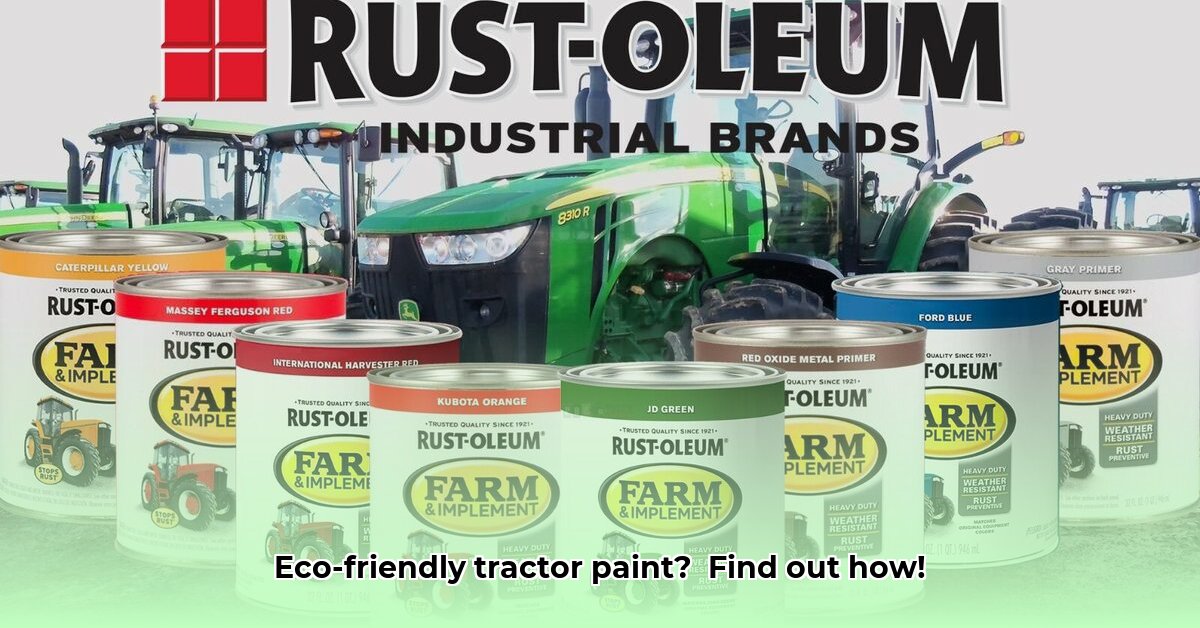
Rustoleum Farm & Implement Paint: A Case Study
Rustoleum Farm & Implement paint, known for its durability, presents a complex situation. While highly durable, reducing the frequency of repainting, its potential environmental impact needs to be considered. A lifecycle analysis comparing Rustoleum Farm & Implement paint with sustainable alternatives is essential to determine its overall environmental cost-effectiveness.
Actionable Steps: A Collaborative Effort
Transitioning to sustainable tractor implement paint requires a collective effort from all stakeholders. Here are actionable steps for each group:
1. Equipment Manufacturers:
- Conduct Life Cycle Assessments (LCAs) of current paint use to identify environmental hotspots.
- Increase investment in research and development of bio-based and low-VOC paints.
- Design equipment for repairability and longevity, reducing the need for frequent repainting. This strategy also promotes circular economy principles.
2. Farmers and Ranchers:
- Demand transparency from paint manufacturers regarding environmental impact data and full ingredient lists.
- Prioritize bio-based or low-VOC paints, weighing long-term environmental benefits against upfront costs.
- Implement proper paint waste disposal procedures, following all local and regional environmental regulations. Improper disposal negates many of the positive environmental impacts of sustainable paint choices.
3. Paint Manufacturers:
- Provide complete and transparent environmental impact statements for all products, including details of ingredients and manufacturing processes.
- Prioritize research and development of high-performance, low-impact paints, encouraging increased production and affordability.
- Invest in closed-loop recycling systems for paint waste to reduce landfill burden and create valuable resources.
4. Policymakers and Regulatory Bodies:
- Implement and enforce stricter regulations on VOCs in agricultural paints, phasing out the most harmful substances.
- Establish financial incentives (tax breaks, subsidies) for farmers adopting sustainable paint practices and manufacturers developing eco-friendly options.
- Invest in research and development funding for innovative sustainable paint technologies.
Conclusion: Painting a Greener Future
The transition to sustainable tractor implement paint is not merely an environmental responsibility; it's a strategic business decision. Consumers are increasingly demanding sustainability, favoring companies and farms committed to eco-friendly practices. By prioritizing greener options, agriculture can enhance its reputation, conserve precious resources, and ensure a healthier planet for future generations. This is more than a simple paint job; it is an investment in a sustainable and thriving future for agriculture.